
Ellora Khandekar
rehabINK Profile
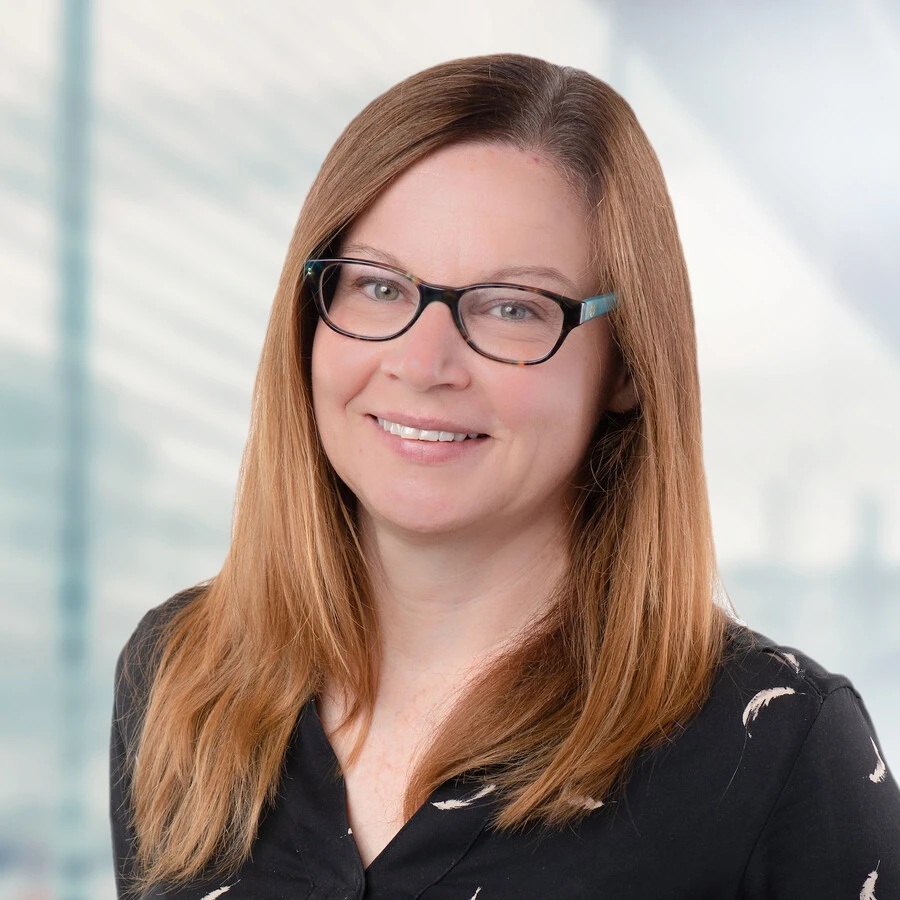
Dr. Kristin Musselman is a physical therapist conducting research in populations with complex neurological diseases. She has worked with the Department of Physical Therapy at the University of Toronto for the past 12 years, and has recently been involved in the Rehabilitation Sciences Institute as the Associate Director. Now stepping into the role of interim director of the physical therapy program, she is most looking forward to the “opportunity to spend a bit more time in the PT department [and] learn more about its operations”.
Dr. Musselman’s interest in physiotherapy began in Grade 11. After her grandfather suffered from a stroke, she was introduced to the field via a home-care physiotherapist, which inspired her to begin volunteering at her local hospital. She then began a Bachelor of Life Sciences at Queen’s University, and after two years, was accepted into the Bachelor of Physiotherapy program. She completed both degrees at the same time; by the time she was 23, she was a practicing physiotherapist.
Dr. Musselman worked in a rotational position at a local hospital, exposing her to many areas of physiotherapy. She noticed that “there was still a lot of work to be done” to increase evidence-based practice in the profession, at which point she decided to begin a career in research. She started a master’s degree at the University of Alberta, grateful for the “opportunity to live somewhere very different” from the bustling city of Toronto. After completing this degree, she moved on to a PhD, during which she had her first child. She then found a postdoctoral fellowship position at the Kennedy Kreiger Institute and Johns Hopkins School of Medicine. During this time, Dr. Musselman had her second child. It was at this point in detailing her path that she realized it was somewhat more linear than she previously thought; she began with a goal, pursued necessary education, then gradually built a career in research while growing her family.
Despite a relatively smooth road, the main obstacle Dr. Musselman has encountered is the “universal challenge” of funding. Every researcher struggles with obtaining funding for their work, and as she said, “I think when […] you start applying for grants and you don’t always have success, it can be very discouraging”. Dr. Musselman was given one very helpful piece of advice that she loves to pass along: “you need to apply to at least five grants just to get a single grant”. This remains somewhat discouraging, but she emphasized that once you receive one, you must “hold up that success as evidence that you’re doing what you need to do”. Another challenge Dr. Musselman experienced was determining what opportunities to pursue. She said, “the best advice I can give is talk to as many […] mentors [and] colleagues, and get different people’s perspectives on what they think, whether it’s a good opportunity, and how it might benefit you”. Ultimately, all the decisions she made brought her to where she is today. She emphasized that although something may not have initially fit into your plan, that doesn’t mean it can’t get you where you want to go.
In the same spirit as the 5:1 ratio, Dr. Musselman finds ways to motivate herself using failures. “People don’t realize […] how much failure successful academics do experience,” she said. Even once you have an established career, failure will always be a part of growth. She used the example of having a paper or a grant rejected: “I may be disappointed for half an hour, but you just learn to move on. […] Acknowledging it can be difficult, but it’s certainly a skill that we all learn through experience and over time”.
When discussing the aspects of her career that she was most proud of, Dr. Musselman spoke about the mentoring of postdoctoral fellows, PhD students, and MSc students. She stated: “I’ve been […] very fortunate to have really exceptional trainees who have not only done well in the program, [but] I’m [also] very proud of where they’ve gone afterwards”. Her mentees have moved on to successful careers in multiple fields such as occupational therapy, physical therapy, and research. She discussed how “somebody might have a career goal that really is outside of [her own influence] or work,” but “it’s an interesting challenge” that she ultimately enjoys. Mentoring is the part of Dr. Musselman’s career that she finds the most rewarding and where she can see the most direct impact.
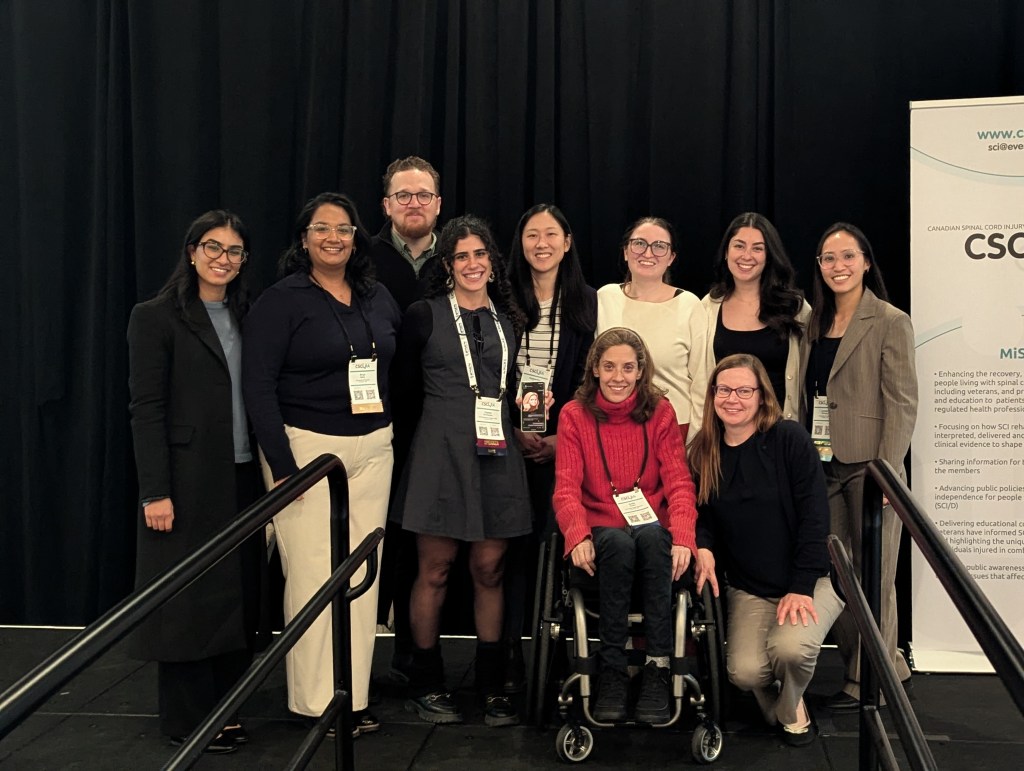
Dr. Musselman says that she tries to “always learn things from everything [she’s] part of”. As a mother of two sporty teenagers, Dr. Musselman spends lots of her time off traveling to and from extra-curricular engagements and managing various sports teams. Additionally, Dr. Musselman herself enjoys curling, swimming, and cross-country skiing, though the latter became more difficult once she moved from Alberta back to Ontario. With her own active hobbies, she recognizes the importance of taking breaks and stepping away from work. She finds having physical outputs incredibly helpful to off-set her daily work routine in front of a computer. Through managing her children’s teams, she’s been able to expand on her knowledge of working in teams. She talked about how she has learned some strategies “from being immersed in [the] sports team environment, [and] applied it to [her] own research team”. Furthermore, she’s found that working towards a common goal can be incredibly unifying and lead to higher quality work.
Despite having led and managed teams for years, Dr. Musselman continues to improve upon her leadership skills. She stated that “the interesting thing about being a researcher is, you’re kind of naturally thrown into leadership”. When she was in grad school, the focus was primarily on research skills, and leadership skills were meant to be developed after graduation. Even now in her career, she finds there’s always more ways to become a better leader.
As she steps into this new role, Dr. Musselman is excited about the opportunity to contribute at a higher level. “I’ve always been very proud to be part of this faculty,” she said, “so it’s […] exciting to be at the table and […] to help elevate what the department is doing”.

