

Topical Commentary
By Riya Shah
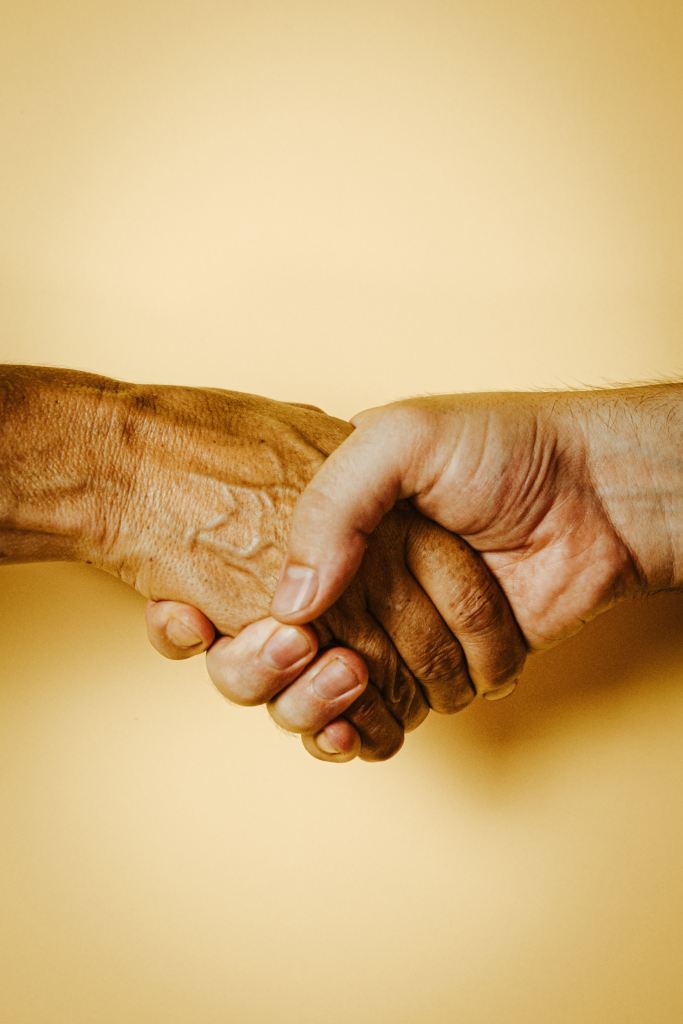
Featured Image by Alex Jackman (Unsplash)
Meet Juan (He/Him)
*The following story is not based on true events.
78-year-old Juan grew up in the valleys of Trinidad. He was raised by his father, alongside his two other brothers, to be a strong, independent man. At the age of 17, Juan and his family immigrated to Canada, where Juan went on to complete his education at an engineering college and worked in his field until retirement. As Juan retired, he found himself reflecting on his life and who he was outside of the context of his career. Juan spent the rest of his older adulthood out as a gay man and proud member of the 2SLGBTQPIA+ community. As he continued to age, he found himself navigating a world where social circles diminished due to stigmatization, older adult mental health needs were unaddressed, housing support became limited, and access to equitable healthcare seemed out of reach.

Health Disparities and Current Barriers
As adults transition into older adulthood, they may experience changes related to their social circles, hobbies and activities, and identities (1, 2). 2SLGBTQPIA+ older adults have been identified as a vulnerable population, and face health disparities further complicated when intersecting with additional marginalized identities (3). Racialized 2SLGBTQPIA+ older adults experience a heightened burden of health disparities due to the intersections of their sexual and racial identities (4, 5). As Canada’s population ages, it is essential to acknowledge the heterogeneity of older adults, including their diverse health needs as they age (6). In 2018, approximately 7% of 2SLGBTQPIA+ Canadians were aged 65 or older (7). This population experiences a higher prevalence of chronic illness and physical health challenges such as asthma, diabetes, HIV/AIDS, obesity, arthritis, and cancer (8), and health institutions and systems fail to cultivate inclusive and accessible services for this population (8). Studies have also shown that 2SLGBTQPIA+ older adults have a higher prevalence of anxiety, depression, and substance use disorders (4). Current literature demonstrates health disparities among urban, cisgender gay men, with fewer studies exploring health outcomes across other queer and trans communities (9, 10).
2SLGBTQPIA+ older adults are less likely to seek out health services due to fears of discrimination and maltreatment, homophobia, and transphobia from health services providers (8,11). As a result, older adults conceal their identity, delay their care, and have an increased risk of multiple health challenges (11). Currently, a lack of service provider awareness persists in the care of 2SLGBTQPIA+ clients, and often this negligence silences the needs of this older adult population (11). Unfortunately, many providers are still reluctant to ask about sexual orientation, sexual practice, gender identity, and gender-affirming care, silencing the needs of the 2SLGBTQPIA+ community (12). A general lack of access to knowledgeable health and social providers, and the inaccessible healthcare system at large puts this group of older adults at risk for health disparities (13).Unsplash, Alex Jackman
The Role of Occupational Therapy
Functioning in day-to-day activities or “occupations” is a major aspect of the scope of practice of occupational therapists (14). Occupational therapists play a crucial role in working with 2SLGBTQPIA+ older adults. Occupational therapists and allied healthcare workers can work toward occupational engagement and occupational justice (14), meaning that providers must strive for equitable care and ensure acceptable resources are allocated to the population in need (14). Occupational therapists can engage 2SLGBTQPIA+ older adults in self-care activities like dressing, grooming, sexual intimacy, and functional mobility, especially for clients transitioning medically and non-medically. Supporting older adults in the engagement of leisure, productivity, and social occupations can be essential to support the mental health and wellness of this population (13). Occupational therapists should also assist with community engagement, and help older adults become re-accustomed to environmental resources, such as housing support, finding employment, transitioning into retirement, and finding appropriate healthcare (13). Importantly, occupational therapists can advocate for their older adult clientele and provide them with the support that makes their needs more visible in the healthcare system (13).
Reflexivity and Supporting Older 2SLGBTQPIA+ Adults
Practice with this population begins with the need for a critically reflexive framework and to consider own positionality and privileges as a healthcare provider. As a cis-gender, heterosexual woman, I want to acknowledge my positionality as a future healthcare provider, and the gaps in learning I have when working with the 2SLGBTQPIA+ community.
As healthcare providers, we must take the essential steps to create an inclusive, affirming environment for 2SLGBTQPIA+ older adults in our practice. The use of inclusive intake forms, assessments, and communications is foundational to building rapport and ensuring the visibility of our clients (15). We must be aware of the significant impacts of homophobia, transphobia, and oppressive cis-heteronormativity in the lives of queer and trans people. In communicating with our clients, we should use culturally sensitive and age-appropriate language and dispose of homophobic, transphobic, and prejudiced views (15). Advocating for inclusive and affirming services in healthcare and the community are crucial steps to validating sexuality and gender identity. Institutions have a duty of providing their staff with training on anti-oppression, anti-racism, and 2SLGBTQPIA+ -specific education (15). With the expansion of healthcare provision, it is my hope that healthcare providers, including occupational therapists, take the necessary steps to support and affirm 2SLGBTQPIA+ older adults.
Resources
- https://www.lgbtagingcenter.org/
- https://sinaigeriatrics.ca/wp-content/uploads/2018/01/21.-LGBTQ-1.pdf
- https://www.lgbtqiahealtheducation.org/resources/in/lgbtqia-older-adults/
- https://otflourish.com/ot-and-lgbtq-in-older-adults/
- https://www.ncbi.nlm.nih.gov/books/NBK563176/
To refer to this article, it can be cited as:
Shah R. Article title: 2SLGBTQPIA+ Older Adults’ Health and Occupational Therapy. rehabINK. 2023:Issue 15. Available from: https://rehabinkmag.com
References
- Kortes-Miller K, Wilson K, Stinchcombe A. Care and LGBT aging in Canada: A focus group study on the educational gaps among care workers. Clinical Gerontologist. 2019 Mar 15;42(2):192-7.
- Chen, Jinwen, et al. “The aging experiences of LGBTQ ethnic minority older adults: a systematic review.” The Gerontologist 62.3 (2022): e162-e177.
- Kim HJ, Jen S, Fredriksen-Goldsen KI. Race/ethnicity and health-related quality of life among LGBT older adults. The Gerontologist. 2017 Feb 1;57(suppl_1):S30-9.
- Fredriksen-Goldsen KI, Kim HJ, Barkan SE, Muraco A, Hoy-Ellis CP. Health disparities among lesbian, gay, and bisexual older adults: Results from a population-based study. American journal of public health. 2013 Oct;103(10):1802-9.
- Halkitis PN, Maiolatesi AJ, Krause KD. The health challenges of emerging adult gay men: effecting change in health care. Pediatric Clinics. 2020 Apr 1;67(2):293-308.
- Statistics Canada. (2021). A statistical portrait of Canada’s diverse LGBTQ2+ communities. Available from https://www150.statcan.gc.ca/n1/daily-quotidien/210615/dq210615a-eng.htm.
- The Center. (2023). What is LGBTQIA+?. Available from https://gaycenter.org/about/lgbtq/
Emlet, C. A. (2016). Social, economic, and health disparities among LGBT older adults. Generations, 40(2), 16-22.
- Fredriksen-Goldsen KI, Kim HJ, Barkan SE, Muraco A, Hoy-Ellis CP. Health disparities among lesbian, gay, and bisexual older adults: Results from a population-based study. American journal of public health. 2013 Oct;103(10):1802-9.
- Halkitis PN, Maiolatesi AJ, Krause KD. The health challenges of emerging adult gay men: effecting change in health care. Pediatric Clinics. 2020 Apr 1;67(2):293-308.
- Addis, S., Davies, M., Greene, G., MacBride‐Stewart, S., & Shepherd, M. (2009). The health, social care and housing needs of lesbian, gay, bisexual and transgender older people: A review of the literature. Health & social care in the community, 17(6), 647-658.
- Ports, K. A., Barnack‐Tavlaris, J. L., Syme, M. L., Perera, R. A., & Lafata, J. E. (2014). Sexual health discussions with older adult patients during periodic health exams. The journal of sexual medicine, 11(4), 901-908.
- Simon, P., Grajo, L., & Powers Dirette, D. (2021). The role of occupational therapy in supporting the needs of older adults who identify as lesbian, gay, bisexual, and/or transgender (LGBT). The Open Journal of Occupational Therapy, 9(4), 1-9.
- CAOT. How does Occupational Therapy Help? [Internet]. 2022 [updated 2022; cited 2022 14 Nov]. Available from https://caot.ca/site/aboutot/howOThelp?nav=sidebar.
- Association of Occupational Therapists of Ireland. (2023). LGBT+ Awareness and Good Practice Guidelines for Occupational Therapists. Available from https://teni.ie/wp-content/uploads/2019/07/1cd6ce2a-bec6-4864-a94b-842167fcb78e.pdf.
 rehabINK | A world of rehabilitation research, practice, and advocacy