

Original Research
By Gabrielle Crichlow, Ahrrabie Thirunavukkarasu, Tess Wishart, Devyn DeMars, Gerald McKinley, & Shannon Sibbald
Introduction
Non-suicidal self-injury (NSSI) is defined as “the deliberate, self-inflicted destruction of body tissue without suicidal intent” (1) and is prevalent among adolescents at rates of 17-18% in community samples. (1). Some individuals engaged in NSSI maintain an online presence indicating a need for online health promotion (2). Online health promotion techniques are engaging ways to foster better communication, raise awareness in the community, and encourage people to change harmful behaviours (3). Social media can be leveraged to improve community health conditions, assist with outreach, and be a platform for advocacy and participatory action (4). This article builds upon a larger exploratory study which had both qualitative and quantitative elements (the Self Appreciation Project [SAP]) by co-authors of this article (TW, DD, GM) (5). The purpose of this article was to qualitatively explore existing levels of knowledge about NSSI in the general online community and assess awareness of mental health resources through the analysis of the open-ended qualitative questions in the survey administered in the larger exploratory study. Ethics was obtained through Western University’s Medical Research Ethics Board (#118114).
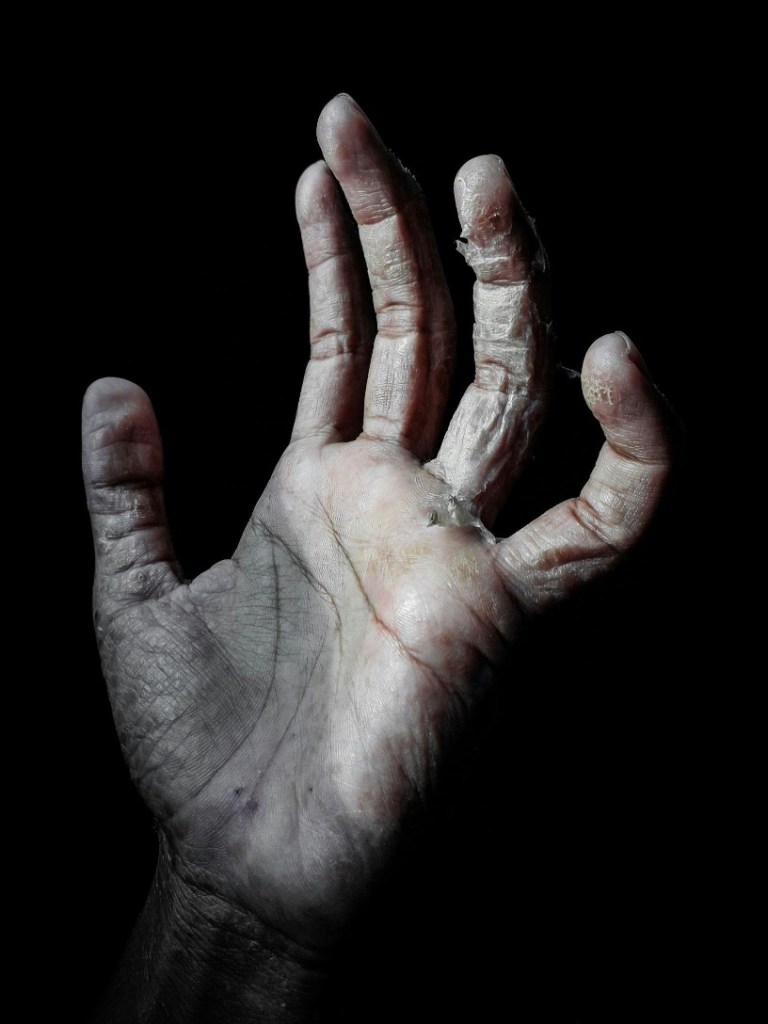
Nazmi Zaim (Unsplash)
Participant Information
Seventy-six participants were recruited through the SAP social media accounts (5) . There were 76 participants; 51 identified as female (67.11%), 23 as male (30.26%), one as non-binary (1.32%); and one participant did not disclose their gender (1.32%). The primary age group of respondents was 20 to 29 (n=57; 75.00%), followed by 19 and under (n=7; 9.21%).
Methods
Responses to the qualitative questions were analysed based on Trochim and Kane’s (7) concept mapping process, and the questions are listed as headings in the results section below. Two of the researchers (GC and AT) independently created two draft concept maps from the NSSI survey data. They were then combined to form one large concept map using LucidChart, an online platform that can be used to create diagrams (see Supplemental Material 1). Participant responses were analysed independently for each of the four qualitative survey questions; data was then analysed in aggregate to create common domains/groupings. Domain names were constructed using words or phrases from participant responses or were constructed by the researchers to encompass the common themes. These domains became main branches of the concept map and examples from the raw data were branches off of the main domains. The epistemological stance of the researchers leaned towards constructivism, as domains were co-constructed through inductive thematic coding. Embracing this paradigm indicates an adherence to a relativist stance, acknowledging the existence of multiple equally valid realities (6).

Results
What does the term “self-injury” mean to you?
Three domains constructed from participant responses of what self-injury meant to them: (a) harming oneself; (b) active action; and (c) mental illness.
Respondents stated that individuals engaging with self-injurious behaviours were harming themselves. Participants described the mechanism of self-injury (i.e. through burning, cutting, substance abuse, starvation, stimulation, skin injuries, and substance abuse). There was a widespread belief that engaging in self-injurious behaviour is a means of expressing emotions connecting self-injury as a process for emotional release. Participants drew multiple connections between self-injury and emotional release, as a process to “release tension”, “express negative emotions,” “take pain away”, “provide relief”, or “process deep thoughts”. Mental illness was frequently reported as a potential cause for self-injury. The act of self-injury was also described as an active action that was intentional or purposeful, a form of voluntary “self-punishment” or “self-mutilation.”
How is mental health related to “self-injury”?
Seven domains were constructed identified in the relationship between mental health and self-injury: (a) mental health disorders; (b) feelings; (c) malfunctioning brain chemistry; (d) manifestations of poor health; (e) mindset; (f) emotional release; and (f) punishment.
Most participants reported that self-injury resulted from mental health disorders like bipolar disorder, depression, and anxiety. Respondents provided a biological explanation for self-injury, describing it as “ulcer[ed] brain functioning” or “part of the brain turning on you”. Manifestations of “poor” mental health or “mindset” were viewed as causes for these volatile emotional states. Self-injury was also viewed as a social behaviour, an “attention-seeking behaviour”, stemming from a lack of support network or due to “frustration between family members.” Respondents viewed self-inflicted physical harm as a way of punishing oneself if they thought it was deserved.
What does “self-regulation” mean to you?
Six main domains were constructed around the meaning of self-regulation: (a) finding a way to limit harm; (b) control; (c) regulating; (d) balance; (e) having a coping mechanism; and (f) participants who did not know the term.
Participants expressed the domain of limiting harm in two ways: frequency and severity, ultimately determining a way to cope with thoughts and emotions that did not involve self-injury. The concept of control can be linked to the domain of regulating through a participant’s description of self-regulation as “being able to be in full control of your impulsive thoughts through a healthy state of mind in order to achieve wellness”. Coping mechanisms were presented as a form of self-regulation which participants described as “using cognitive tools and external tools” and “strategies to regulate mental and emotional state” to achieve “balance.” Participants identified that coping mechanisms would be helpful by being able to “recognize personal triggers” and “taking the necessary steps to protect yourself mentally and emotionally”.
Do you know any resources that are available in your community to help with mental illnesses and self-injury?
Ten domains were constructed from participant responses: (a) employers; (b) mobile apps; (c) public mental health services; (d) medical professionals; (e) hospitals; (f) school; (g) social media; (h) local health services; (i) telephone helplines; and (j) other.
Participants identified employers as a resource for mental illness support; the “Employee Assistance Program (EAP)”, “Employee and Family Assistance Program (EFAP)” and “Work Organization Resources” were predominant responses. Numerous mobile applications specializing in mental health assistance were identified: “iBreathe” (8) “Rootd” (9) “BoosterBuddy” (10) “Foundry BC” (11); “Calm Harm” (12), and “Hope by CAMH” (13). Public Mental Health Services encapsulate formal services identified by participants including: “CAMH”, “CMHA” and seven others (please see Supplemental Material 1 for more). Medical professionals identified by participants included “doctors”, “therapists”, “psychologists”, and/or “physicians” as resources that could help with mental illnesses. The hospital domain captured the locations of some of the services identified by participants, namely in “mental health units” and “in-patient mental health”. The domain of school related to educational institutions where participants identified resources found at different levels from secondary to post-secondary education. Social media was not frequently identified as a possible mental health resource. The eighth domain of local health services incorporates many of the services/ resources that participants were aware of in their respective areas. This illustrated participants’ knowledge about mental health services in their communities. The participants presented telephone helplines that provide help with mental illnesses and self-injury, including “telehealth”, “Good2Talk”, “Kids Help Phone”, and “suicide hotlines”. There were other resources that participants identified that could not be placed into the domains, this included family, friends, authority figures, and conducting a Google search to find resources.
Discussion
The literature suggests that through social media, researchers can access underrepresented and vulnerable communities, beyond barriers caused by social factors (14). Individuals use social media platforms to share advocacy content, express themselves, and learn how to cope with mental health difficulties (15, 16). Coming from a constructivist paradigm, the researchers engaged in iterative coding and thematic development revealed that the ongoing efforts in knowledge translation and mobilization have been successful in advancing online community knowledge about NSSI, thus validating and addressing the gap in the literature.
Exploring participants’ perspectives in the online sphere is particularly valuable, given that social media provide a space for participants to openly advocate against or encourage engagement in NSSI. Though there is a heavy stigma associated with NSSI, participants understood the motivations behind such actions and provided empathetic and educated responses as where to locate resources that reduce harm. The iterative coding of the findings demonstrated that participants’ individual realities coincide with each other.
Respondents provided a deep, nuanced account of how mental health was related to self-injury by exploring the interpersonal and intrapersonal factors triggering self-injurious behaviours (17). Participants’ responses also indicated that health promotion campaigns by different professional resources have been successful in creating awareness of their services. Additionally, technology-related campaigns could also be vital sources of information. Community-level knowledge dissemination is recognized more by participants over social media health promotion interventions for NSSI.
Conclusion
Ongoing efforts in health promotion research have been successful in educating the public. The efforts of health researchers are successful in destigmatizing NSSI in the broader community, as study participants could provide empathetic and compelling explanations for how NSSI can affect individuals and knowledge of mental health resources. This study provides evidence for supporting health promotion research through funding and additional support; and for leveraging social media to increase knowledge translation of NSSI to the community.
Acknowledgements
Researchers: Gabrielle Crichlow, Ahrrabie Thirunavukkarasu, Tess Wishart, Devyn DeMars, Gerald McKinley, Shannon Sibbald.
Featured illustration by Mauro Mora (Unsplash).
Funding
Social Science and Humanities Research Council Insight Grant (R5218A06).
To refer to this article, it can be cited as:
Crichlow G, Thirunavukkarasu A, Wishart T, DeMars D, McKinley G, & Sibbald S. Exploring Community Knowledge of Non-Suicidal Self-Injury (NSSI). Original Research. rehabINK. 2024:Issue17. Available from: https://rehabinkmag.com
References
- Zetterqvist M. The DSM-5 diagnosis of nonsuicidal self-injury disorder: a review of the empirical literature. Child Adolesc Psychiatry Ment Health. 2015;9(1):31–31.
- Guccini F, McKinley G. How deep do I have to cut?“: Non-suicidal self-injury and imagined communities of practice on Tumblr. Soc Sci Med 1982. 2022;296:114760–114760.
- Korda H, Itani Z. Harnessing Social Media for Health Promotion and Behavior Change. Health Promot Pract. 2013;14(1):15–23.
- Parker A, Kantroo V, Lee HR, Osornio M, Sharma M, Grinter R. Health promotion as activism: building community capacity to effect social change. In: Proceedings of the SIGCHI Conference on Human Factors in Computing Systems [Internet]. ACM; 2012. p. 99–108. Available from: https://dl-acm-org.proxy1.lib.uwo.ca/doi/pdf/10.1145/2207676.2207692
- Wishart TE, DeMars D, McKinley GP. The self appreciation project: An exploratory study of social media for youth mental health promotion. Ment Health Prev. 2022;28:1–9.
- Ponterotto JG. Qualitative research in counseling psychology: A primer on research paradigms and philosophy of science. Journal of Counseling Psychology 2005 04;52(2):126-136.
- Trochim W, Kane M. Concept mapping: an introduction to structured conceptualization in health care. Int J Qual Health Care. 2005;17(3):187–91.
- iBreathe. Apple Store. 2022. iBreathe – Relax and Breathe. Available from: https://apps.apple.com/us/app/ibreathe-relax-and-breathe/id1296605806
- Rootd. Google Play. 2022. Rootd. Available from: https://www.rootd.io/\
- Booster Buddy. Google Play. 2022. Booster Buddy. Available from: https://play.google.com/store/apps/details?id=com.viha.boosterbuddy&hl=en_CA&gl=U
- Foundry BC. Homepage [Internet]. 2022. Available from: https://foundrybc.ca/
- Calm Harm. About Calm Harm. 2022; Available from: https://calmharm.co.uk/#about
- Centre for Addiction and Mental Health (CAMH). Hope by CAMH [Internet]. 2022. Available from: https://www.camh.ca/hopebycamhapp
- Chou W ying S, Prestin A, Lyons C, Wen K yi. Web 2.0 for health promotion: reviewing the current evidence. American Journal of Public Health (1971). 2013;103(1):e9–18.
- Clarke AM, Kuosmanen T, Barry MM. A Systematic Review of Online Youth Mental Health Promotion and Prevention Interventions. Journal of Youth and Adolescence. 2015;44(1):90–113.
- Montag C, Yang H, Elhai JD. On the Psychology of TikTok Use: A First Glimpse From Empirical Findings. Frontiers in Public Health. 2021;9:641673–641673.
- Nock MK. Self-Injury. Annu Rev Clin Psychol. 2010;6(1):339–63.
 rehabINK | A world of rehabilitation research, practice, and advocacy