
Profile
By Madalena Liougas
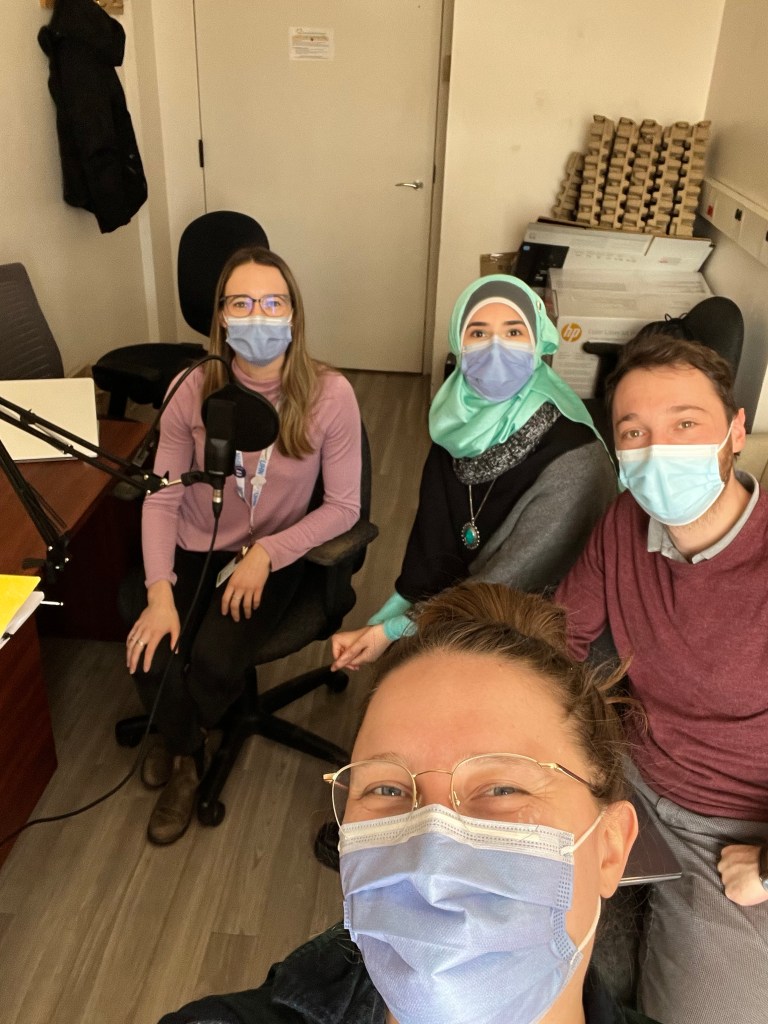
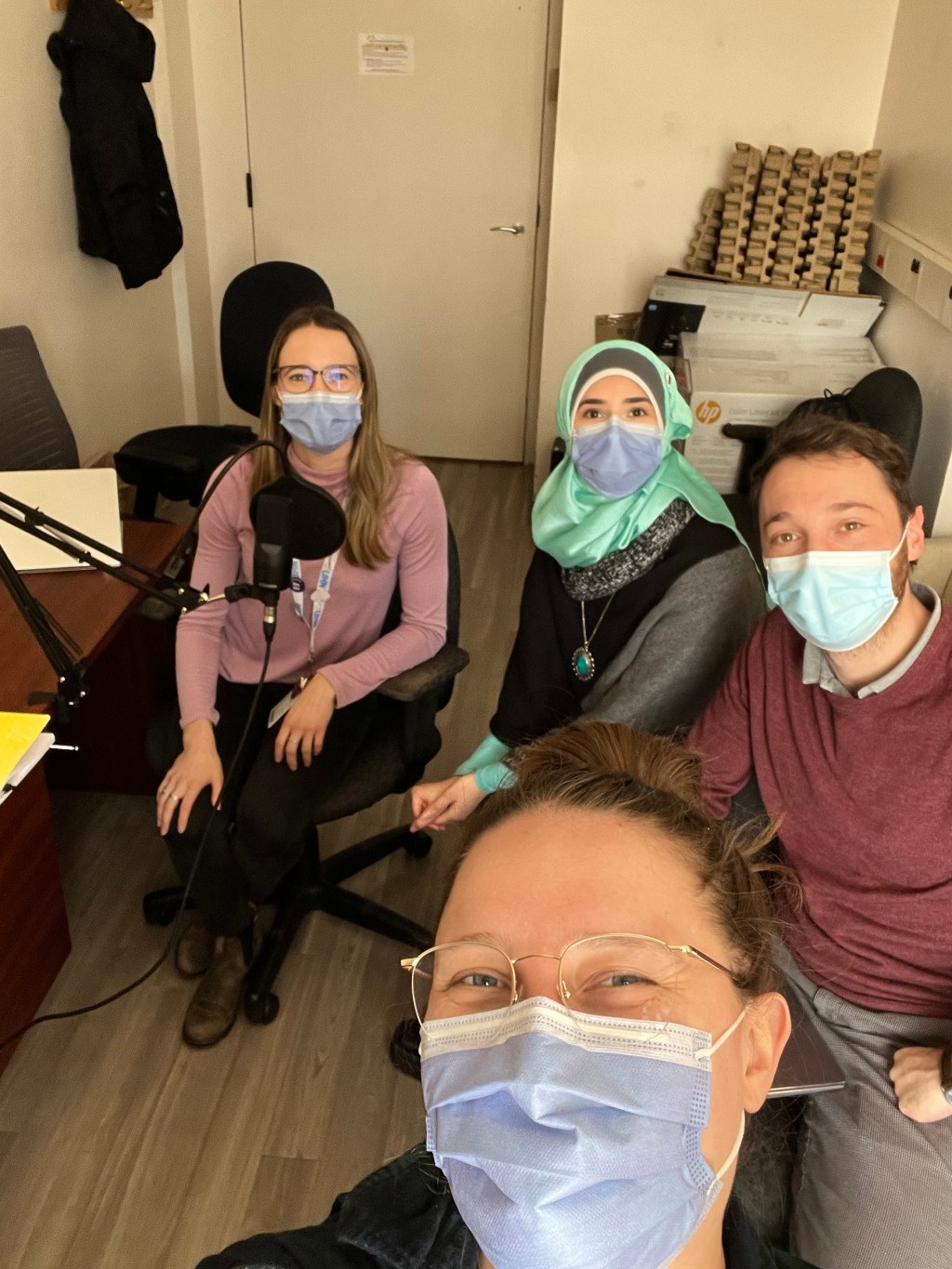
There are more than 1300 trainees that work across the 7 research institutes at the University Health Network (UHN).Majority of these trainees remain anonymous to each other and the research that occurs within their institute and across the UHN. Dr. Emily Mills, along with her colleague Rima El-Sayed recognized a new way to engage the UHN trainee community. In response, they collaborated and launched the Seeds of Science podcast in October of 2022.
What is Seeds of Science?
The Seeds of Science podcast is an inclusive and educational platform whereby masters, doctoral and postdoctoral researchers at UHN can connect and share their academic journeys. Funded by the Office of Research Trainees, Emily and Rima have interviewed a dozen trainees from the Techna Institute, Toronto General Hospital Research Institute, KITE-Toronto Rehab Institute, Krembil Research Institute, and the Princess Margaret Cancer Centre. Interviewees offer unique insight into their personal successes and barriers as they discuss relatable topics such as imposter syndrome, fear of rejection, confidence in their academic and professional abilities, funding successes, work-life balance, support systems and research impact. Each 25-minute episode is designed for convenient, easy listening and works to uplift and inspire audiences. Unlike other public forums which focus on the perspective of the Principle Investigator, Seeds of Science highlights the trainees’ perspective and encourages listeners to reach out to interviewees.
“Your first publication really feels like you’ve sort of stepped up to the plate in science. – Seeds of Science Episode 4

Meet the Seeds of Science Hosts
Dr. Emily Mills (post-doctoral researcher) and Rima El-Sayed (doctoral candidate) are both members of Dr. Karen Davis’s lab at the Krembil Brain Research Institute. Emily completed her previous education at the University of Sydney and she focuses on using neuroimaging to look at how acute and chronic pain affect the structure and function of the brain. She embraces the challenges that research presents and uses her passion to think of innovative strategies to complex problems related to the mechanisms of pain. She explores why certain individuals respond to pain relief interventions and why others do not.
Rima pursued her undergraduate and graduate education at the University of Toronto. She completed a specialist degree in neuroscience and a minor in physiology in 2019. Following her undergraduate degree where she gained experience in coding, Rima transitioned from a master’s into a doctoral degree where she was able to engage her interests related to neuroimaging and chronic pain. She enjoys using her knowledge gained from the literature to implement novel solutions tailored to the needs of participants who experience chronic pain. Her work focuses on spinal cord stimulation and the response of the treatment on affected individuals.
Why Podcasting?
Podcasting is a flexible, easy-to-use, personalized way of communication. Emily and Rima recognized the humanity involved with hearing the voices of fellow trainees whether listeners are at the lab, commuting, or at home. Neither Emily or Rima envisioned themselves as podcasters, however they exemplify how passion towards an idea can transform into action. In Fall of 2021,Emily approached Rima in their lab at the Krembil Research Institute and pitched her the idea of creating the Seeds of Science podcast. With recognizing the disconnection and lack of feeling of community across the UHN post-COVID, Rima immediately embraced Emily’s podcast pitch.Together they learned the ‘in’s and out’s’ of podcasting, including how to use the technology that accompanies this process. Hosting, creating, and publishing a podcast is not always straightforward. Emily and Rima, along with their team of PhD students, post-doctorates, and a clinical research coordinator, supported each other through countless hours of recruiting, planning, editing, and processing each episode.
Although podcasting is a hobby, the time commitment should not be underestimated! The team follows a rigorous process for each episode: (i) recruit trainees, (ii) respond to trainees who have expressed interest in being interviewed, (iii) read over interviewee applications, (iv) conduct a pre-interview to map out specific topics of discussion and help interviewees feel comfortable, (v)conduct the actual interview, and (vi) engage in an interview debrief and feedback. Emily and Rima have adopted this process because it helps interviewees convey their story the way they envision edit. In the media, the stories of interviewees are often distorted. To ensure this does not occur, Emily and Rima practice active listening and ensure they ask the right questions so that the interviewee’s story reveals itself. The right questions probe interviewees to expand on the important topics that were identified by the interviewee during the pre-interview preparation. A hallmark of Seeds of Science has been its ability to share diverse voices. Interviewees of the podcast all have unique and interesting backgrounds that are able to reach a wide UHN trainee audience. This includes researchers in the BRAIN-To Lab at the TECHNA Research Institute,Toronto General Hospital Research Institute,KITE-Toronto Rehab Institute, Krembil ResearchInstitute, and the Princess Margaret Cancer Center. Topics discussed in interviews include metabolic regulators, cell therapies for osteoarthritis, motor speech assessment, Ehlers Danlos Syndrome and Hypermobility Spectrum Disorders, and quantitative MRI properties. The topics of conversation will continue to grow as the Seeds of Science podcast continues to expand!
“Whatever we do in the lab one day will affect real people and that really motivates me todo the best science.” – Seeds of Science Episode 3
Key Insights from Interviewees
Following the release of season one, interviewees often reflected that participating in Seeds of Science enabled them to promote the knowledge translation of their research and expand their network.Interviewees found that their podcast episode became a conversation starter as their peers and non-academic audiences reached out following the episodes release.
Moving Forward
Emily and Rima have expressed endless gratitude regarding the outpouring of kind and positive support they have received in response to Seeds of Science. All of their interviewees have stated that being a part of Seeds of Science is exciting as they are able to share their research and expand their network!Seeds of Science is looking to expand!
If you are interested in joining the team or participating as an interviewee, please email Emily and Rima at: uhntraineepodcast@gmail.com.
Stay tuned for Fall 2023 when Seeds of Science releases Season 2!
Acknowledgements
Featured photo from the Seeds of Science team for rehabINK.
To refer to this article, it can be cited as:
Liougas M. Seeds of Science: Engaging over 1000 University Health Network Trainees. rehabINK. 2023:Issue15. Available from: https://rehabinkmag.com
 rehabINK | A world of rehabilitation research, practice, and advocacy